
Reliable IT infrastructure, seamless integration for business‑critical systems.
We help organisations plan, build, secure, and manage their technology infrastructure with clear goals, defined deliverables, and a practical approach.
- Enterprise networking
- Firewalls and VPN
- Servers and storage
- Virtualization
- Cloud and hybrid
- GPU compute
- Backup and recovery
- AMC and maintenance
Our role
Technology decisions, engineered around your requirements.
IT projects often run into problems because requirements aren't clear, vendor responsibilities overlap, or documentation is missing. We bring clarity, coordination, and accountability to every project.
- Understand users, sites, applications and constraints.
- Plan A solution sized to your environment and team.
- Integrate network, compute, storage, security and cloud.
- Coordinate suppliers, change windows and testing.
- Support the environment within the agreed scope.
What we cover
Six service areas across the infrastructure lifecycle, from the first requirement to long-term upkeep.
Relevant environments
The kinds of environments these services support.
- 01 / 06
Business IT environments
Offices that depend on a reliable network, shared servers, secure internet access and well-maintained endpoints.
- 02 / 06
Enterprise networks
Switched and routed networks with multiple VLANs, wireless coverage, internet links and security zones.
- 03 / 06
Server rooms and data centres
Racks of servers, storage and network equipment with power, cooling and cabling that need to be planned and maintained.
- 04 / 06
Cloud and hybrid infrastructure
Workloads split between on-premises systems and cloud platforms, connected securely and managed consistently.
- 05 / 06
Compute-intensive environments
GPU and high-performance servers for AI, analytics, simulation or engineering workloads with high power and bandwidth needs.
- 06 / 06
Distributed and multi-site infrastructure
Branches, plants or offices that need consistent network design, secure inter-site connectivity and common standards.
Illustrations show typical environment shapes, not customer deployments.

Cybersecurity
- Firewall planning and implementation
- Endpoint security and identity controls
- Security reviews and hardening
Perimeter and network security, endpoint protection and access controls, planned and configured as part of the infrastructure rather than added afterwards.
Explore Cybersecurity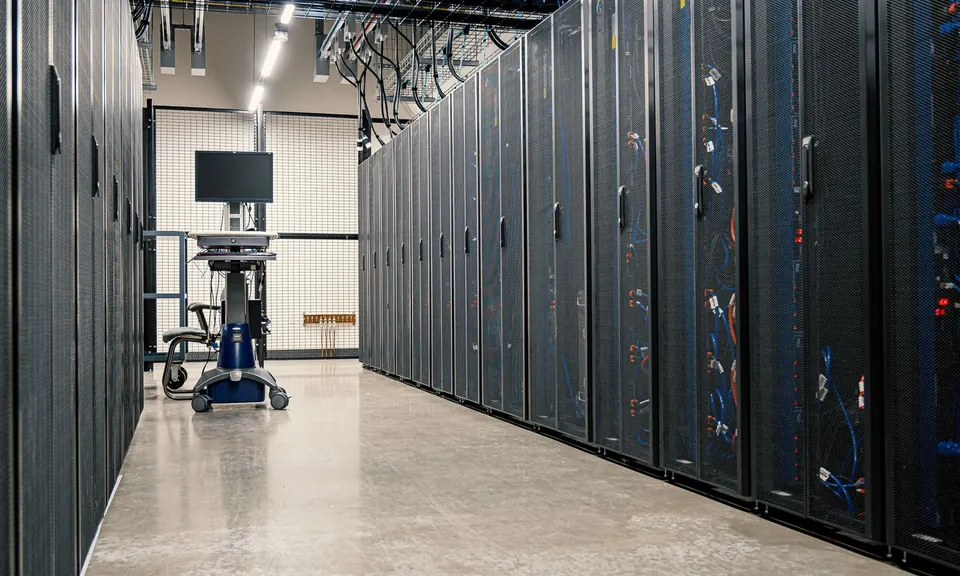
IT Infrastructure and System Integration
- Enterprise networking and architecture
- Servers, storage and virtualization
- Server room and data centre infrastructure
Enterprise networking, servers, storage and virtualization, integrated and configured to work together as one documented environment.
Explore Infrastructure and Integration
AI and GPU Computing
- GPU server infrastructure
- AI and ML workload infrastructure
- Compute, storage and network planning
Infrastructure planning and integration for GPU servers and compute-intensive workloads, from sizing and facility checks to deployment and handover.
Explore AI and GPU Computing
Cloud Infrastructure
- Cloud readiness and migration planning
- Hybrid and private cloud environments
- Cost and resource optimization
Cloud readiness, migration and deployment for public, private and hybrid environments, with security and running costs planned from the start.
Explore Cloud Infrastructure
Managed IT Services and Maintenance
- Annual Maintenance Contracts
- Server and network administration
- Backup and recovery planning
Preventive maintenance, administration and backup planning for servers, storage and network equipment, under an AMC or an agreed support scope.
Explore Managed IT and Maintenance
IT Consulting and Advisory
- Technical requirement assessment
- Architecture and solution design
- Procurement and implementation planning
Requirement assessment, solution design, technology selection and procurement planning before budgets and purchase orders are committed.
Explore IT Consulting and Advisory
How we work
Four stages, applied to every engagement.
Each stage ends with something you can review: a written requirement, a design and scope, a tested system, and handover documentation.
- Step 1
Understand
Discuss the requirement, the existing environment, constraints and the business objective behind the request.
- Requirement discussion
- Review of existing systems
- Site visit where needed
- Step 2
Design
Define the proposed approach, the technologies involved, who is responsible for what, and the scope in writing.
- Solution design
- Bill of materials
- Scope and responsibilities
- Step 3
Implement
Coordinate deployment, integration, configuration and testing according to the agreed project plan.
- Planned change windows
- Configuration and integration
- Acceptance testing
- Step 4
Support
Provide the agreed handover, documentation, maintenance or ongoing support for the environment.
- As-built documentation
- Administrator handover
- Maintenance where agreed
Engagement models
Structured around how you want to work.
Final scope, staffing, commercial terms and service levels are set out in the agreed proposal for each engagement.
- 01
Project-based implementation
A defined piece of work with a clear scope, plan and handover.
- Scope is defined by
- Fixed scope and milestones
- Typically suits
- New deployments, refreshes and migrations
- What you receive
- Working system with as-built documentation
- 02
Annual Maintenance Contract
Scheduled maintenance and repair support for your equipment, over a contract year.
- Scope is defined by
- Asset schedule over the contract period
- Typically suits
- Installed equipment that needs upkeep
- What you receive
- Maintenance reports and a call log
- 03On request
Managed services
We handle routine administration for an agreed set of systems.
- Scope is defined by
- Service schedule with recurring tasks
- Typically suits
- Teams without dedicated infrastructure staff
- What you receive
- Routine administration and service reports
- 04On request
Resident engineer deployment
An engineer works at your site, on an agreed schedule.
- Scope is defined by
- Role, location and working hours
- Typically suits
- Sites that need an engineer present
- What you receive
- On-site support and activity logs
- 05
Consulting and advisory
Assessment, design and specifications before you commit budget.
- Scope is defined by
- Defined question and documents
- Typically suits
- Planning, specification and evaluation
- What you receive
- Reports, designs and specifications
Have an IT infrastructure requirement?
Tell us what you need to build, replace, secure or maintain. Share the scope, your current environment or the outcome you are aiming for, and we will reply with questions or proposed next steps.